
Our Music Comes From Somewhere Real. Does AI's?
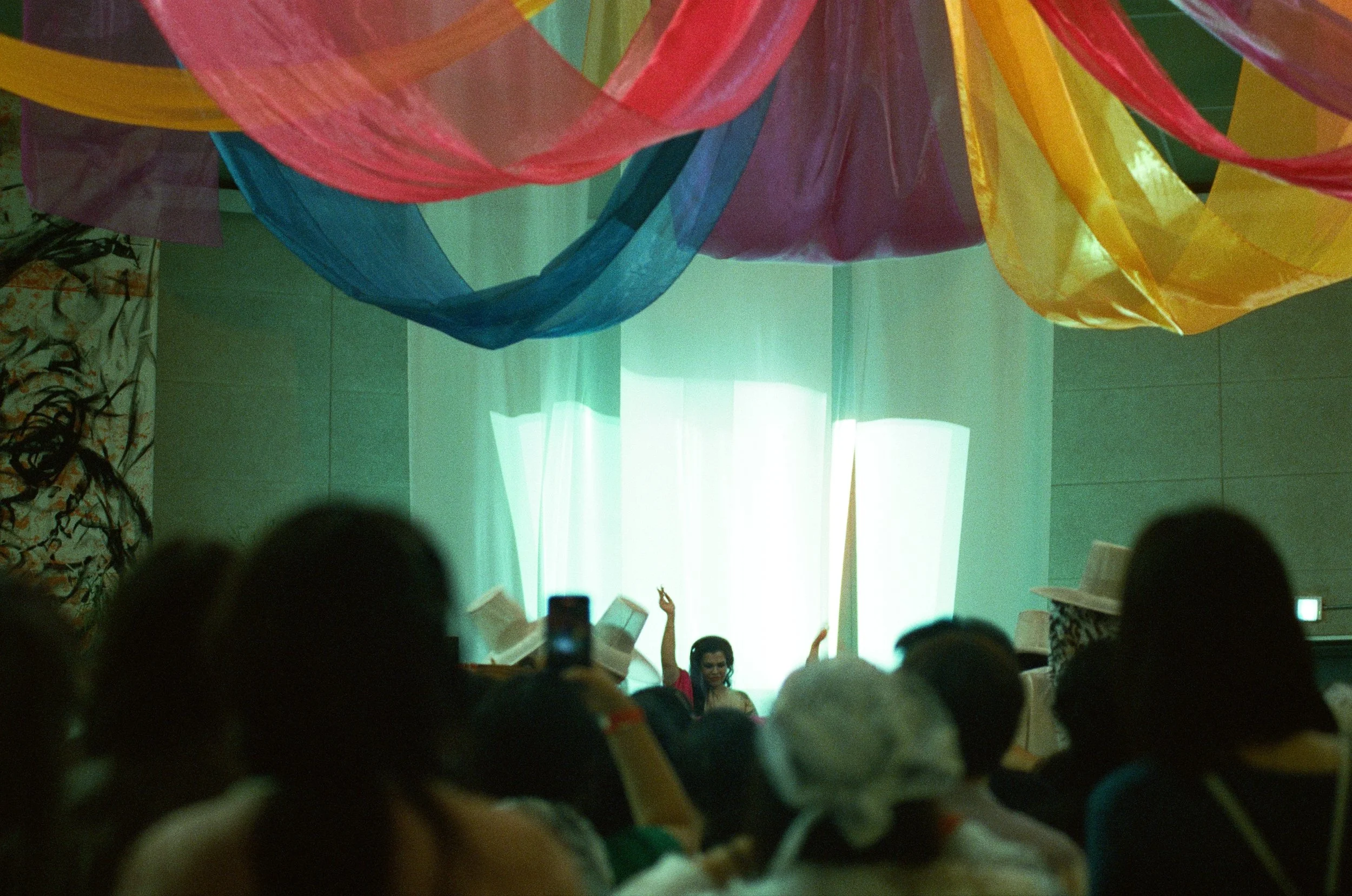
Me DJing alongside the Samulnori team @ Korean Rave 2024
Written by Dhyana Rao-Middleton
Before I built anything, I was in the world of academics. I studied music, how it affects us, our soundscapes, human reactions to music both seen and invisible. Music does not just move you in a poetic or physical sense. It changes the chemistry of your brain. Listening to a song you love releases dopamine, the same chemical your brain releases for food, for connection, for anything it has learned to treat as a reward. Researchers at McGill scanned people's brains while they listened to music that gave them chills, and found dopamine rising twice: once in anticipation of the moment building, and again at the peak of it. Robert Zatorre, one of the researchers, called it the first proof that something as abstract as a piece of music could trigger the same reward system as food or touch. That is not a small finding. It means music is not just entertainment sitting on top of the brain. It is wired into the same system that keeps us alive.
I am not bringing this up to be clinical about something that feels personal to almost everyone. I am bringing it up because I think it is too important to separate from the conversation about AI music.
I brought this up before, and I am bringing it up again
I wrote about this before, in a post called The Inspiration: Music is Our Community, when I said music has always been about connection, not consumption. I said it as a founder then. I am saying it again now as not just a founder, but as a human, a music lover and a musician. Humans did not start making music because it was efficient. We made it because something in us needed to, long before there was an industry to sell it back to us. It shows up in every culture we have ever studied, tied to grief, to ritual, to work, to courtship, to war, to the specific texture of a specific place and time. That is not a coincidence of taste. It is a feature of the human brain built up over a very long history, and it is the reason a song can put you back in a room you have not stood in for twenty years.
Our history with music and AI's history do not interlock
Here is the mismatch I keep coming back to. Humans have been making music for as long as we have been recognizably human, shaped by a nervous system that evolved specifically to respond to it. AI's history with music is a few years old. It did not evolve toward music. It was pointed at music, after the fact, and trained to find the statistical patterns that "work." It was also trained on music, written by people, people telling their stories, expressing their love language, producing their dopamine. Those are not two chapters of the same story. They are two completely different processes that happen to produce something that can sound similar coming out the other end.
That difference matters more than it gets credit for. When a person writes a song, the dopamine, the memory, the specific grief or joy behind it, all of that happened before a single note was written, and it is the reason the note got written at all. When a system generates a song, none of that happened. It did not need to feel anything to produce something that makes your brain feel something, because it reverse engineered the pattern from music made by people who did feel something. It is not creating from the same place we are. It is extracting the shape of what that place tends to produce, from work that already existed, made by someone else.
What that means for authorship
This is why I think meaningful human authorship is not only a legal question, but a question of ethics and consent. The law asks who gets to own a file. I am asking something underneath that. Every model that can produce something resembling a song learned to do it by training on music written by real people, music that came from someone else's dopamine rush, someone else's love language, someone else's grief or memory or reason for making it in the first place. So when a system generates something out of that, is it really authorship, or is it just standing inside someone else's lived experience without ever having lived it. Authorship, to me, is the presence of the actual human process, the chemistry, the memory, the lived reason behind the sound. A song can be technically impressive and still have none of that in it. I think listeners can often feel the difference even when they cannot name it, because the parts of a song that come from lived experience tend to have a specificity that pattern matching does not reach for on its own.
The question I keep sitting with
None of this happens in a vacuum. Every AI model that can produce something resembling a song learned to do it by training on real music, written by real people, almost always without asking them first. So here is the question I do not think anyone making these tools has actually answered, not to me and not to the artists whose work trained them: is there any proof that AI music is not theft when it was trained on the work of people who never agreed to it? I am not asking rhetorically because I am anti-AI. I am asking because I believe music is bigger than it’s face value; and because I have looked for a real answer and I have not found one. I feel like the answer is being avoided because we know AI is the new shiny toy that everyone is enjoying. Until someone gives me one, I am going to keep treating consent as the line, not because I am against the technology, but because I do not think you get to build a reward system out of someone else's chemistry without asking them first.
